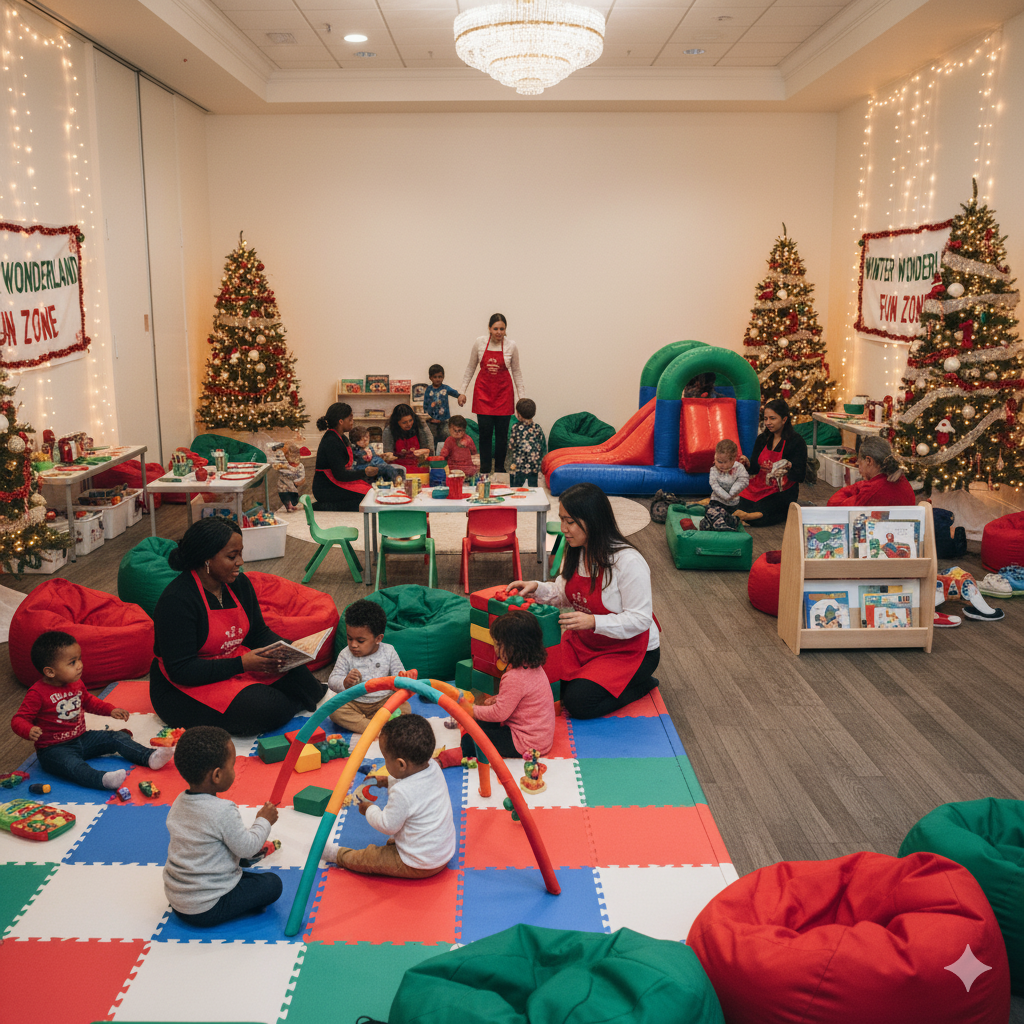
The magic of Christmas is in the air—but for parents of young children, so is the chaos. Between disrupted routines, new toys everywhere, and well-meaning relatives bearing sugar, it's easy for the season to feel more overwhelming than joyful. When it comes to Christmas safety for kids, preparation is everything.
As an RN and the founder of Nurture Haven, I've supported Boston and MetroWest families through countless holiday seasons. Here's my calm, clinically-informed game plan for a safe and sane Christmas week—covering everything from button battery safety to preventing holiday meltdowns when holiday travel with toddlers disrupts your routine.
New toys bring new joys, but they also bring hidden risks. Before the wrapping paper flies, keep these three safety priorities in mind:

CRITICAL SAFETY ALERT: Many electronic toys, musical cards, and light-up ornaments use button batteries. If swallowed, these cause severe internal burns within hours—this is a true medical emergency.
Before handing over any electronic toy, check that all battery compartments are secured with screws. If a compartment is loose or missing its screw, tape it shut with strong packing tape or keep the toy out of reach entirely.
If a button battery is swallowed: Call poison control immediately at 1-800-222-1222 or go to the emergency room. Do not wait. Do not induce vomiting.
If you have children of different ages, the LEGO sets and craft kits for the big kids are choking hazards for toddlers and babies. Establish a "table-only" rule for small toys—they stay on elevated surfaces where curious crawlers can't find them. After the older kids finish playing, do a quick floor sweep before the little ones have free range again.
Keep your Christmas tree well-hydrated (a dry tree is a fire hazard), position it away from fireplaces and heating vents, and always turn off decorative lights before bed. If you're traveling to family in MetroWest or hosting guests at your Boston home, do a quick visual check of extension cords—frayed cords or overloaded outlets are easily missed in the holiday hustle.
Travel, late-night festivities, and excited grandparents are part of the fun—but sleep deprivation is the #1 cause of holiday meltdowns for both kids and parents.
Aim to keep your child's sleep routine intact 80% of the time. If Christmas Eve means a late night, prioritize a solid, on-schedule nap during the day. If you're attending an evening event, protect the morning nap fiercely. One late night is manageable; three in a row creates a sleep debt that takes days to recover from.
Whether you're driving from Newton to your in-laws in Wellesley, heading from your Beacon Hill apartment to family in Needham, or making the trek from Framingham up to the North Shore, bring your child's unwashed crib sheet and their usual sound machine. Even a 20-minute drive means an unfamiliar bedroom. The familiar scent and white noise provide a "sensory anchor" that helps their nervous system relax enough to sleep in a new environment.
This is one of those small clinical insights that makes a huge difference: babies and toddlers regulate through sensory familiarity. You're not being precious—you're being strategic.

From a clinical perspective, holiday gatherings create what's called "sensory overload"—when a child's nervous system gets flooded with too much input at once. Bright lights, loud conversations, new people wanting hugs, the scratchy texture of holiday outfits, unfamiliar food smells—it's a perfect storm for cortisol spikes and subsequent meltdowns.
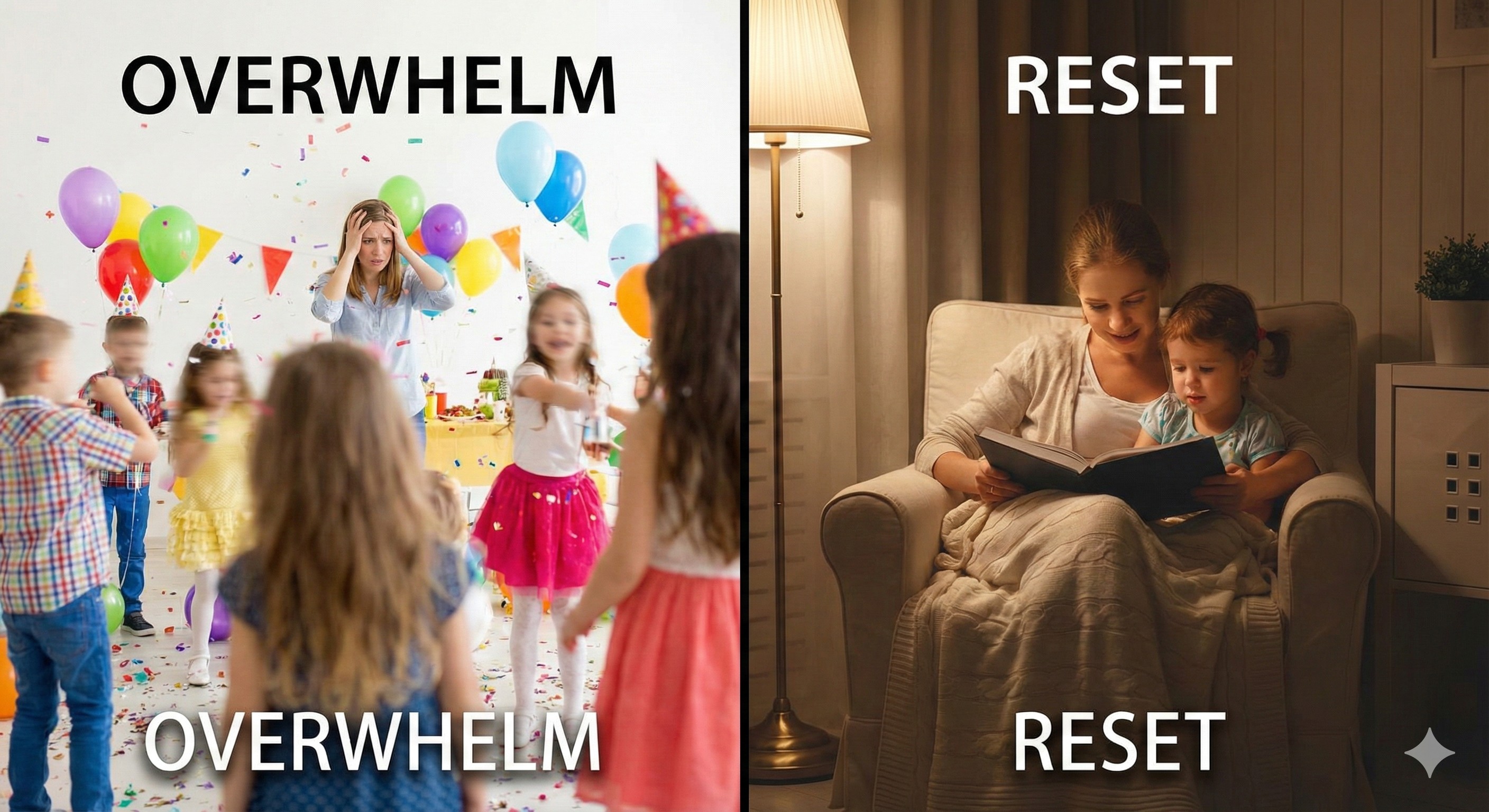
When you see early signs of overwhelm (zoning out, getting clingy, sudden hyperactivity, or rubbing eyes excessively), take your child to a quiet room for 5-10 minutes of low-stimulation activity. Read a familiar book, do some gentle rocking, or simply sit together in dim lighting. This "sensory reset" allows their nervous system to regulate before returning to the celebration.
If you're hosting at your MetroWest home or your Boston brownstone, designate one room as the "calm zone"—dim lights, a few quiet toys, minimal decorations. Let family members know this is the reset space, not the play zone. Even 10 minutes of sensory downtime can prevent a full meltdown.
It's completely okay to say, "We're going to skip the extra cookie right now so we can avoid a sugar crash before the drive home to Framingham." Or, "She's had a lot of stimulation today—we're going to take a quiet break before dessert."
You are the expert on your child's needs, and clinical training backs you up: a regulated nervous system beats forced socializing every time.
Action: When you see 2+ of these signs, it's time for a sensory reset.
As we wrap up 2025, I'm incredibly proud of the community we've built at Nurture Haven. From supporting NICU graduates to providing elite care for Boston's busiest executive families, our mission remains the same: high-stakes care delivered with clinical expertise and a warm heart.
As we head into 2026, Nurture Haven is doubling down on what we do best—and I can't wait to share what's coming for our Sitter Club members and event care partners. More on that very soon.
Wishing you a safe, healthy, and very Merry Christmas.
— Marian Ofori, RN
Founder, Nurture Haven Nannies & Co.
Our Sitter Club caregivers are available for:
Nurture Haven is Massachusetts' only RN-led nanny agency, serving MetroWest and Boston families with healthcare-level standards of safety and professionalism. Our Sitter Club service offers the flexibility busy families need with the reliability and quality you deserve.
Follow us on Instagram for more parenting tips | Join our email list for seasonal safety guides