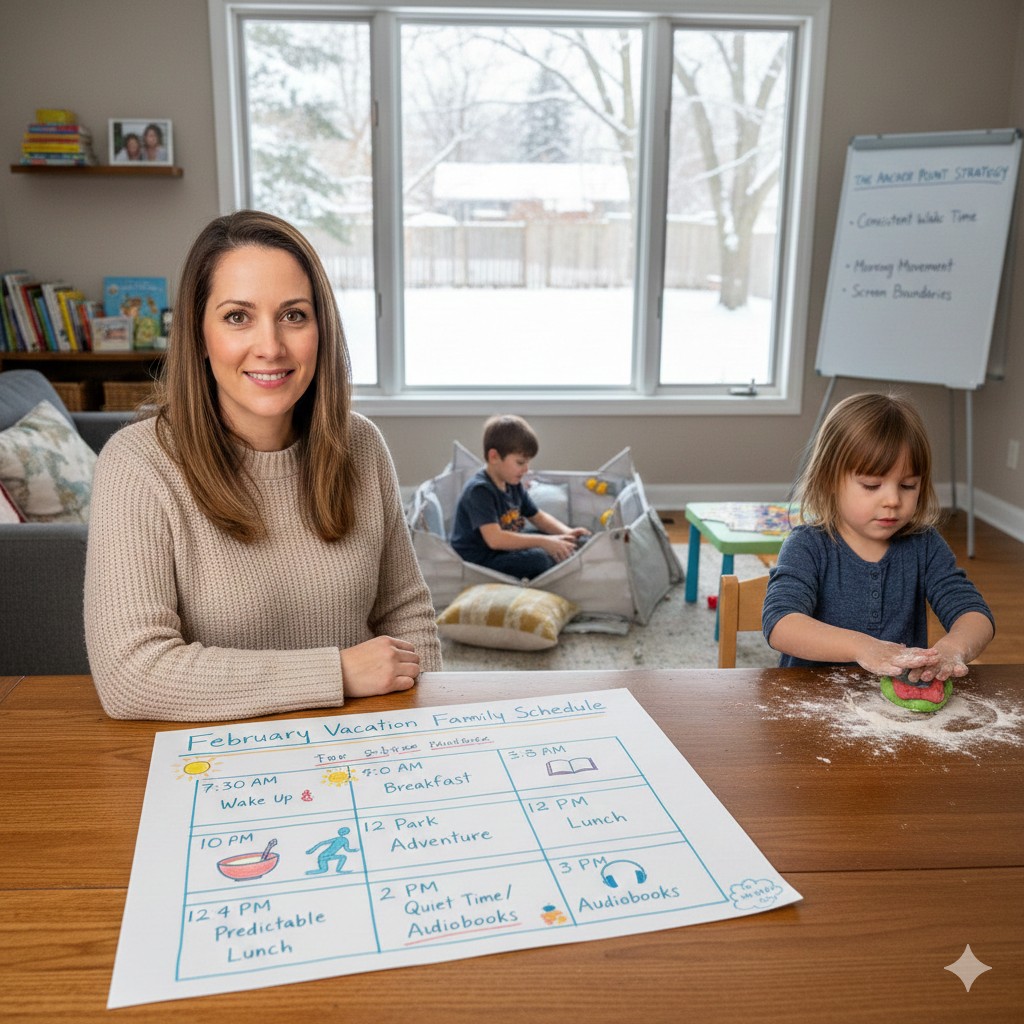
You've finally hit your stride. The morning routine runs like clockwork. Drop-off, commute, work, pickup, dinner, bedtime—it's not effortless, but it's functional. The household has rhythm.
Then February vacation arrives.
For families across Wellesley, Needham, and Sudbury, this week often feels less like a "break" and more like a disruption. The structures that keep everyone regulated—school schedules, activity routines, consistent sleep times—suddenly disappear. And in their place? A kind of drift that affects everyone in the house, adults included.
If you've ever noticed that your children seem more tired, more dysregulated, and more difficult during school breaks, you're not imagining it. There's a clinical explanation—and a practical framework for managing it.
In pediatric and family health settings, we talk about "circadian anchors"—the consistent cues that help bodies and brains know what to expect. Wake times. Meal times. Activity transitions. These anchors don't just organize the day; they regulate the nervous system.
When school is in session, these anchors are largely external. The bus comes at 7:45. Lunch is at noon. Pickup is at 3:15. Children's bodies adapt to these rhythms, and parents build their own schedules around them.
February vacation removes those external anchors all at once.
What often follows is a predictable pattern: later wake times bleeding into later bedtimes, unstructured mornings that spike energy without releasing it, increased screen time filling the gaps, and by mid-week, children who seem inexplicably wound up, emotionally volatile, or exhausted despite "doing nothing."
This isn't a discipline problem. It's a regulation problem. And it's entirely preventable with the right framework.

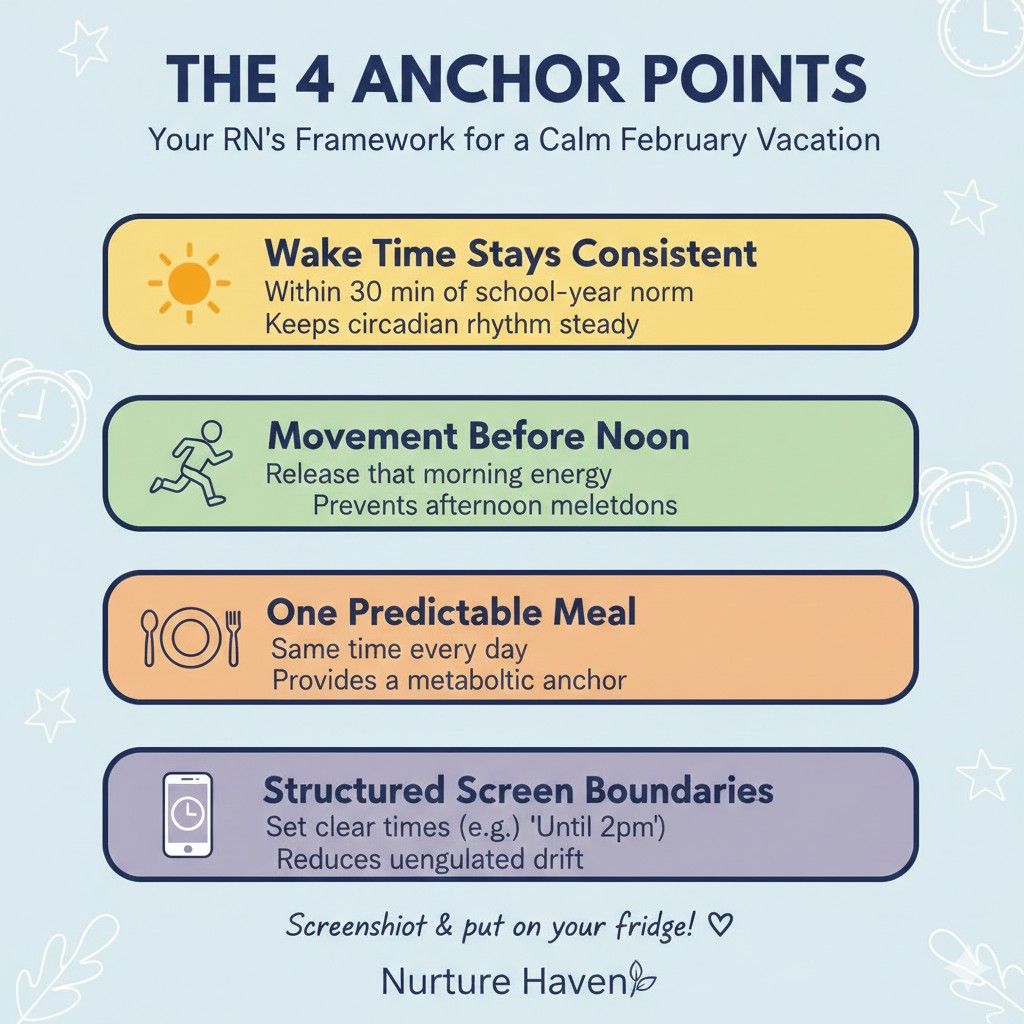
As an RN, I approach school breaks the same way I'd approach any disruption to a patient's routine: by identifying which structures are essential and building the week around them.
The non-negotiables:
These four anchors won't make vacation week feel like a school week—and it shouldn't. But they create enough structure that children's nervous systems stay regulated, and parents don't spend the week managing preventable chaos.
Here's what I've observed across hundreds of families: the children who struggle most during school breaks aren't the ones with "too much energy." They're the ones whose sensory needs aren't being met in the absence of school's built-in variety.
School provides constant sensory transitions—moving between classrooms, different textures and materials, varying noise levels, outdoor recess. Home, by contrast, often defaults to sameness: the same rooms, the same couch, the same screens.
Practical sensory strategies for vacation week:
Let's be honest: most families in Lexington, Concord, and Dover aren't taking the full week off work. February vacation is a childcare challenge disguised as a holiday.
The families I work with typically cobble together coverage—a grandparent for two days, a camp program that doesn't quite align with work hours, a neighbor willing to swap supervision. By Friday, everyone is exhausted, and the "break" has created more stress than it relieved.
This is where planning becomes essential.
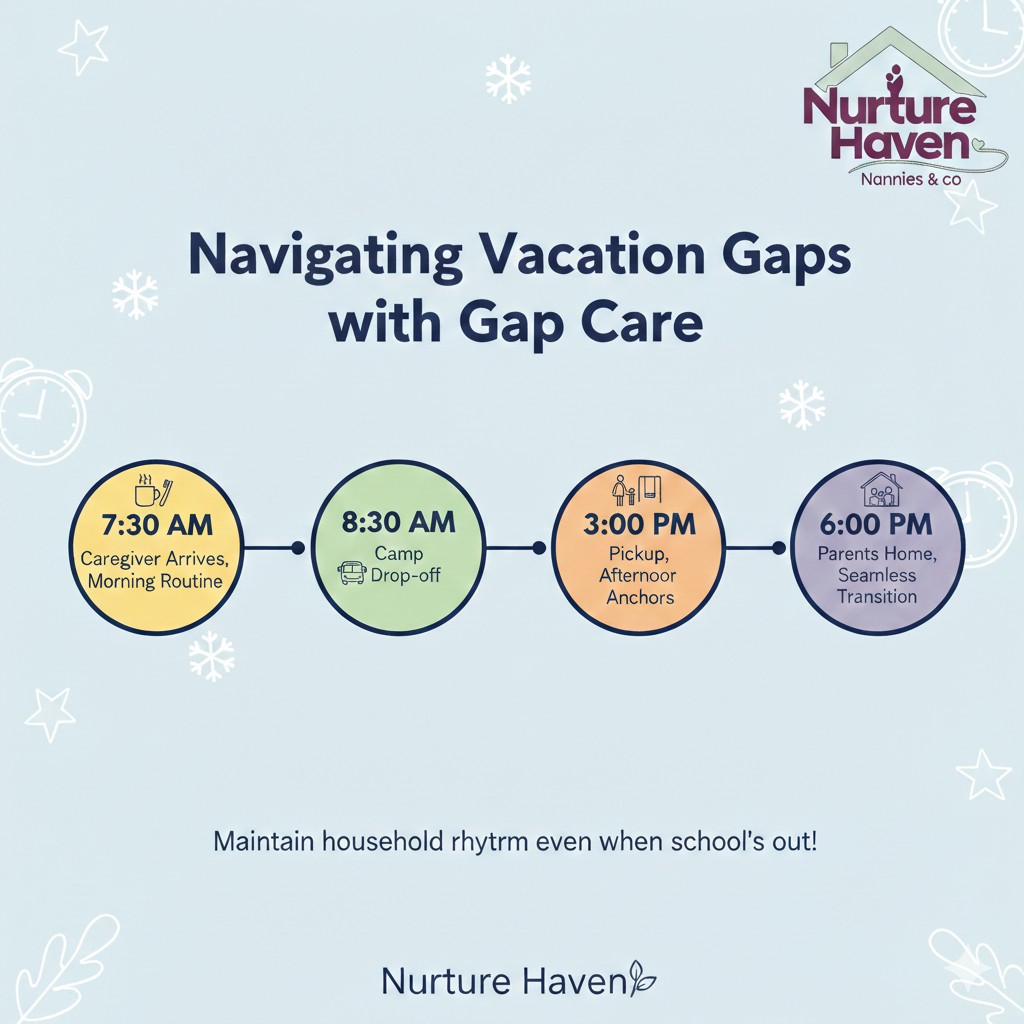
The gap care approach:
Rather than scrambling for full-day coverage, identify the specific gaps that create the most stress. Is it the early morning before a camp program starts? The late afternoon after it ends? The single day that nothing covers?
For Sitter Club members, these gaps become manageable. A familiar caregiver arrives at 7:30 to handle breakfast and camp drop-off. The same person picks up at 3:00 and maintains the afternoon anchor points until you're home. The rhythm of the household continues even when school doesn't.
This isn't about outsourcing parenting. It's about protecting the structures that keep everyone—children and adults—functioning well during a week designed to disrupt them.
I often describe the Sitter Club to families as "childcare insurance." You hope you won't need to use it constantly, but when disruption hits—whether it's a school break, an unexpected work trip, or a sick day that collides with an unmovable meeting—having reliable, vetted, familiar care available isn't a luxury. It's infrastructure.
February vacation is predictable disruption. It comes every year, at the same time, with the same challenges. The families who navigate it smoothly aren't luckier or more organized. They've simply built systems that absorb the disruption instead of being overwhelmed by it.
If you're reading this before the break, you still have time to plan. Identify your gaps. Think through your anchor points. Consider what your children need to stay regulated when their usual structures disappear.
And if you're reading this mid-week, already deep in the drift? Start where you are. Pick one anchor—wake time, morning movement, a predictable meal—and protect it for the rest of the week. Small structures compound.
Nurture Haven's Sitter Club provides gap care coverage for families across Greater Boston and MetroWest during school breaks, sick days, and the unpredictable moments that don't fit neatly into a calendar. Our W-2 caregivers are vetted by our RN-led team and trained to maintain the routines and anchor points your household depends on.
Because school breaks shouldn't break your household.
To learn more about membership before April vacation arrives, contact us for a confidential conversation.